Cultivating Sonship in a Business Culture
(Intro Video and Sharable PDF) It hurts when you lose good people. It feels like abandonment and failure. But nothing feels better than assembling a staff who share the purpose and make the mission happen. Here’s how to minimize desertions and maximize heroes.
This blog was inspired by a Council Session – 2026-10-24 Council – Culture of Sonship
Three Business Strategies Behind Your Transition
This transition is arduous and automated at the same time. There are three simple Kingdom Business strategies that will put your Staff Culture on course for alignment with Father’s heart. Sharing Father’s purpose is the definition of Ecclesia in Business. You can feel it when it happens. Father wild hearts into their heritage instead of managing headstrong hirelings into corporate compliance.
Moving Staff From Servants to Sonship
-
- Business serves a higher purpose than “Itself”
- The Eternal part of business purpose is “People”
- The Essential part of business in the moment is Reformation
- The Regenerative part of Business purpose is Value Creation
- Business serves a higher purpose than “Itself”
-
- The people part of the corporate purpose is:
- Disciplining Sons in an age of Reformation is a movement (Rom 8:19)
- Learning to Hear Hearts is a fundamental part of Leadership
- Not just process, products, and profit
- The people part of the corporate purpose is:
-
- People + process/product/profit are complementary, not competing
- Because Sons outperform servants (via what God can do through them)
- People + process/product/profit are complementary, not competing
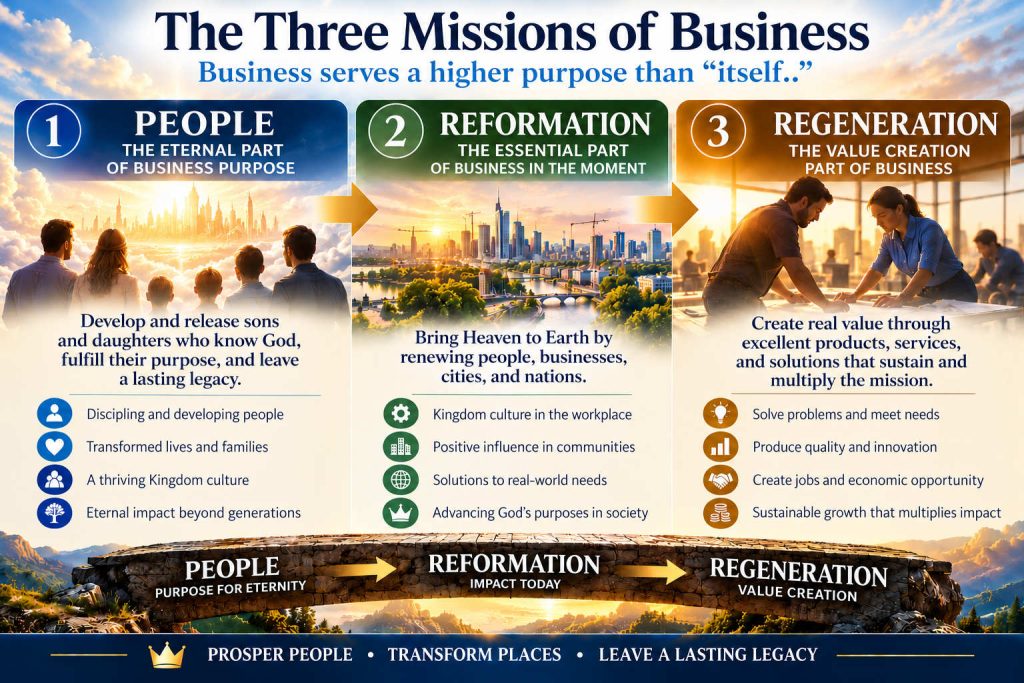
Business philosophies that support the shift from managing to fathering
Most businesses exist to produce process, products and profit. Those matter, and a business that can’t sustain itself can’t serve anyone. But they are not the whole purpose. A business can serve something higher than itself, and the part of that purpose that is eternal is people.
People and Profit Are Partners
People and process, product and profit are complementary, not competing. Treating them as rivals forces leaders to choose between caring for people and running a company. Leaders who are Sons themselves make that choice unnecessary, because they care about the mission and the people at the same time.
Why Sons Outperform Servants
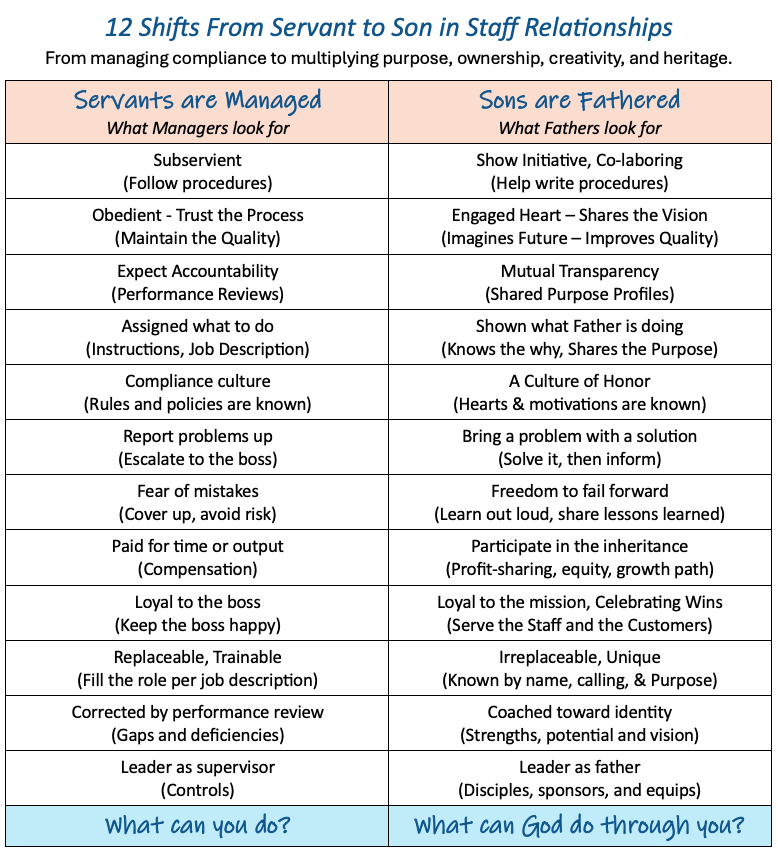
A servant does what can be checked. A son volunteers a solution and owns the outcome. The servant in Mt 25:24-25 buried his talent out of fear of the master. Fear produces the minimum, and ownership produces the multiplication. That is the whole gap, and it is why the table contrasts compliance with co-laboring.
Sons Are Disciplined At a Heart Level
Fathering is not permissiveness. Discipline is the mark of sonship, aimed at who a person is becoming rather than at output alone. Sons have vision for their future and volunteer for the higher standard.
Heb 12:6 – The Lord disciplines the one he loves, and he chastises everyone he accepts as his son.
Higher trust means higher standards. Sons are also grown into their authority and heritage over time, because an heir is no different from a slave until the time set by his father (Gal 4:1-2).
Watch for the Elder Brother
The elder son lived in the house and still said, “All these years I’ve been slaving for you” (Lk 15:29). Staff may adopt the new language and keep the old posture. Some will prefer being managed, because servanthood feels safer. Invite them. Don’t force them.
The Question That Changes the Culture
A servant asks what he can do. A son asks what God can do through him. A business that teaches its people to ask the second question will outgrow the one that only manages the first.
Nine Conversations on Purpose
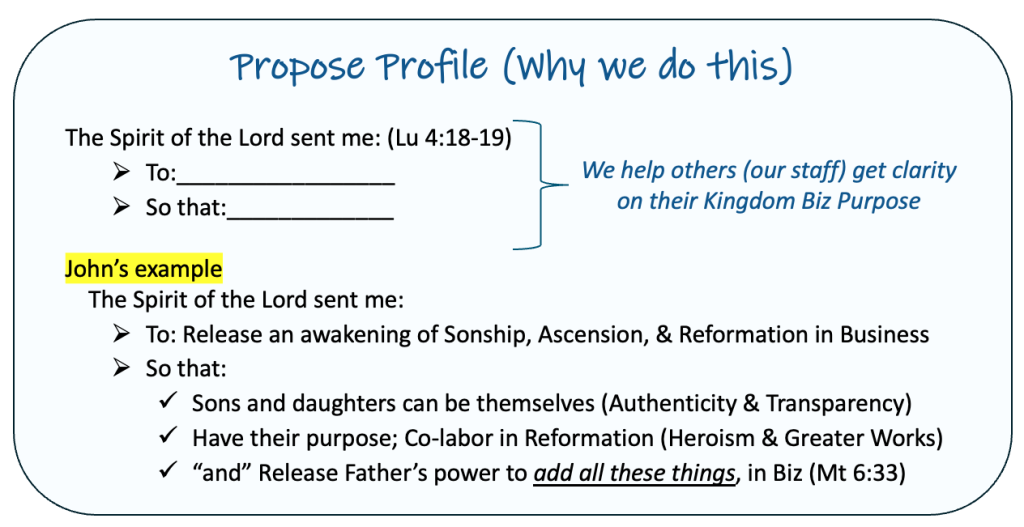
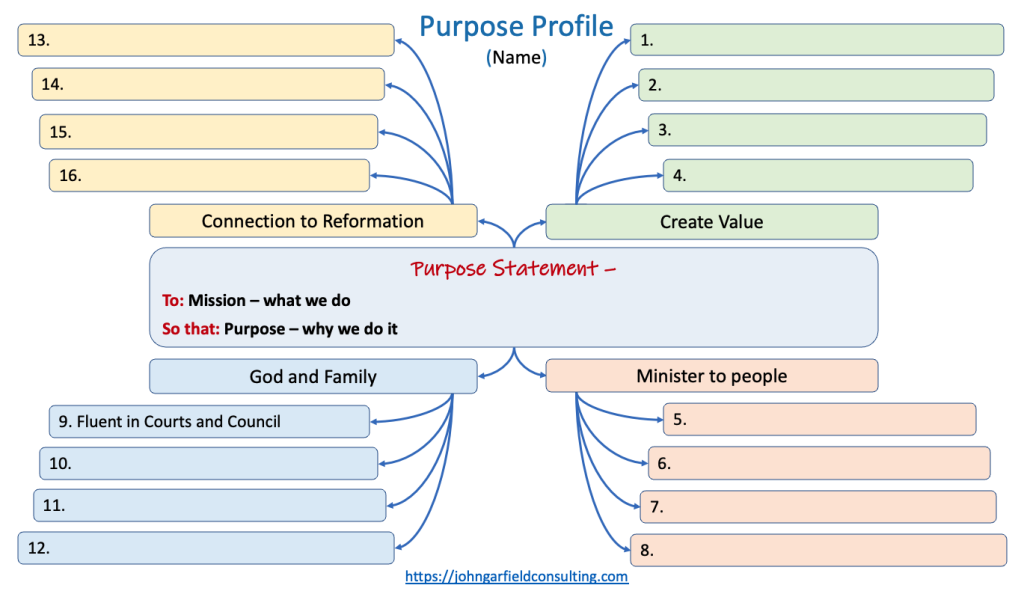
Sons are developed, not declared. We intentionally have nine conversations to grow sons and daughters: Identity, Story, Purpose, Strategy, Tactics, Heritage, Courage, Clarity and Culture. The shared Purpose Profile is the working template. Template: The 7 Spirit Profile
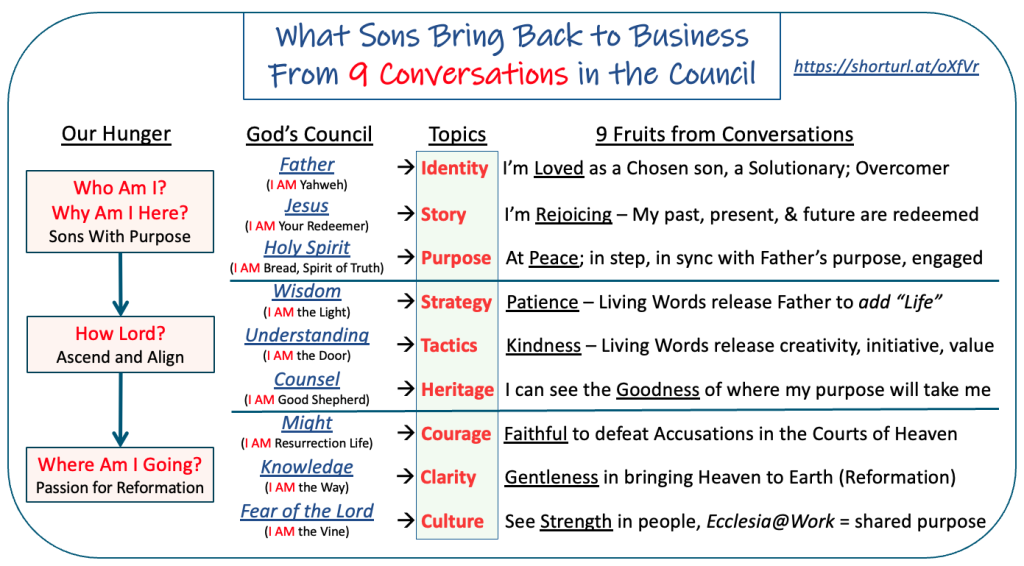
Yes, But How Lord?
Wisdom – I AM the Light of the world (Strategy)
Lord, what’s the wise strategy to Implement this?
#1). Have a clear, prophetic, and written Corporate purpose that everyone can feel and embrace. Then work on individual purpose with those ready to seek it. Find the overlap between personal and corporate purpose over time. Start the progression to pull all your staff into their hearts and spiritual heritage:
-
- Explain the invitation to Sonship, individual purpose, and Reformation to all of the staff
- Get help from Innovators, inspire them personally
- Work with the willing (Early adopters – it won’t be everyone)
- Have “Willing/Connected Managers” conduct weekly 1-on-1’s with early adopters
- Display the fruit of Courts, Council, Ascension (the majority are watching for results)
- Allow the staff to adopt when ready (Observe progress of early adopters)
(Transparency, Clarity, Purpose, Engagement, brightness, enthusiasm = en-theo)
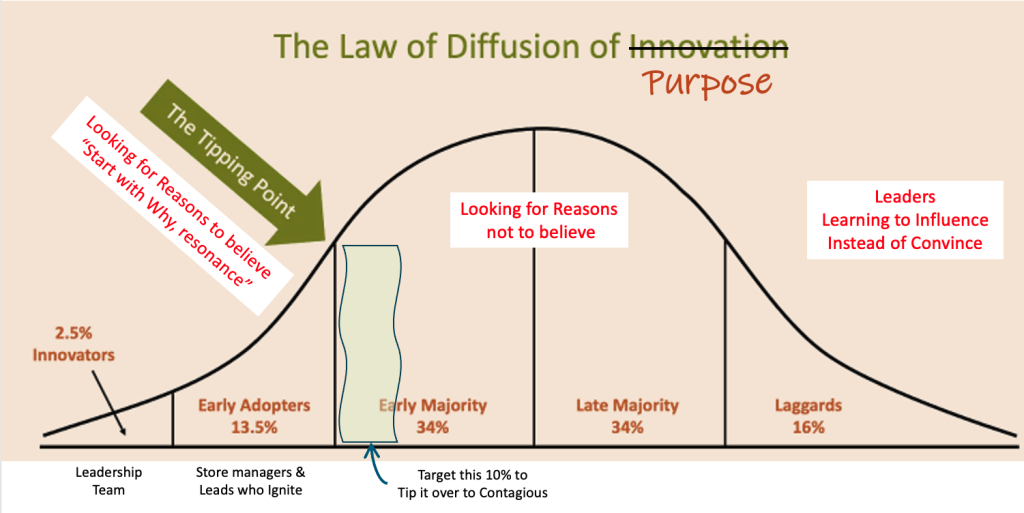
#2). Remember: It took Jesus three and a half years to mature His chosen disciples
-
- Sons ascending to their seat in Heaven is the first goal (Courts & Council).
- But Sonship is a relational lifestyle that never stops growing.
- Following the Lamb is dynamic for lifetime.
- Living Words are new every day.
Understanding – I am the Door (Tactics)
Use written deliverables as Metrics (see Progression to Sonship graphic live links)
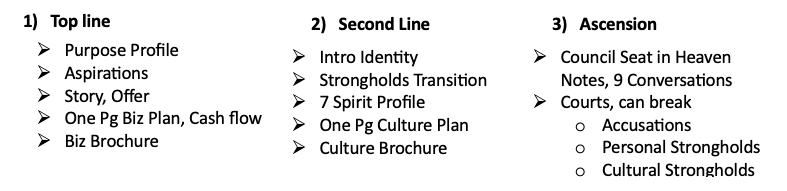
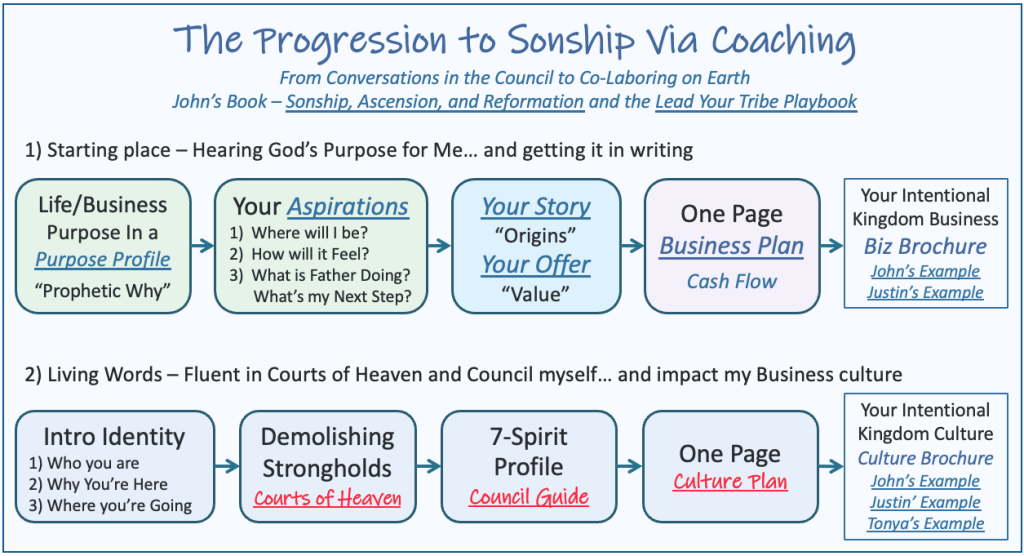
We’re using the 9 Conversations as a means of developing Son & Daughters
- Identity, Story, Purpose, Strategy, Tactics, Heritage, Courage, Clarity, Culture
- In a 1-page purpose Profile – Slides in PPT here
- Template Linked here