Is God a “Hard Man”?
How Sons Dismantle the Lie That’s Burying Their Business Talent
(Intro Video) Ask most Christians what a culture of love looks like, and they will describe something warm, welcoming, and relationally safe (love, acceptance, and forgiveness). All of that is good. None of it is enough. The culture of love that sons are called to build is more specific, more liberating, and more transformative than a superficial, hospitable, hospital atmosphere. It is a culture that gives people their decrees, takes them to the Courts of Heaven, and sets them free from the deepest accusation most of them have never had words for: that God is a hard man.
The Accusation Beneath the Accusation
Jesus told a parable about a man who received one talent and buried it. His explanation: “I knew you to be a hard man, reaping where you did not sow… so I was afraid” (Mt 25:24-25). His theology produced paralysis. He did not invest, risk, or build — not because he lacked the talent, but because his image of the master and his identity as a servant made the risk feel fatal. This is the most common spiritual condition in the church, and it rarely announces itself as a theology. It shows up as chronic underperformance, hidden sin, an inability to receive love, and a low-grade assumption that the losses in life are somehow God’s fault and that I’m a victim.
Servants blame God for the devil’s theft – after all, God controls everything. They interpret their unredeemed story as evidence of God’s indifference or harshness. They have not yet tasted Father’s goodness as a son — His lovingkindness, mercy, and restorative justice — and so the parable’s servant is not a cautionary figure to them; he is a mirror. The fear that kept Israel at the base of Sinai, “do not have God speak to us or we will die” (Ex. 20:19), is the same fear. Both chose distance over encounters because their image of God made experiences with God feel dangerous.
Believers don’t resist the Council because they don’t believe in it. They resist it because they half-believe God is waiting there to confirm their worst fears about themselves.
The secular stronghold is that god is a cosmic moral midget, who has a whole bunch of rules, and he runs around and tries to condemn people for not keeping his rules. Everyone hates him… and enjoys breaking his rules to spite him.
The letter kills, but the Spirit gives life. 2Cor 3:6 (People want to be found, not fixed)
(Life flows from experiences with His Spirit, hearing Living Words, Feeling chosen by God)
Love Is an Extension of Experiencing God’s Heart
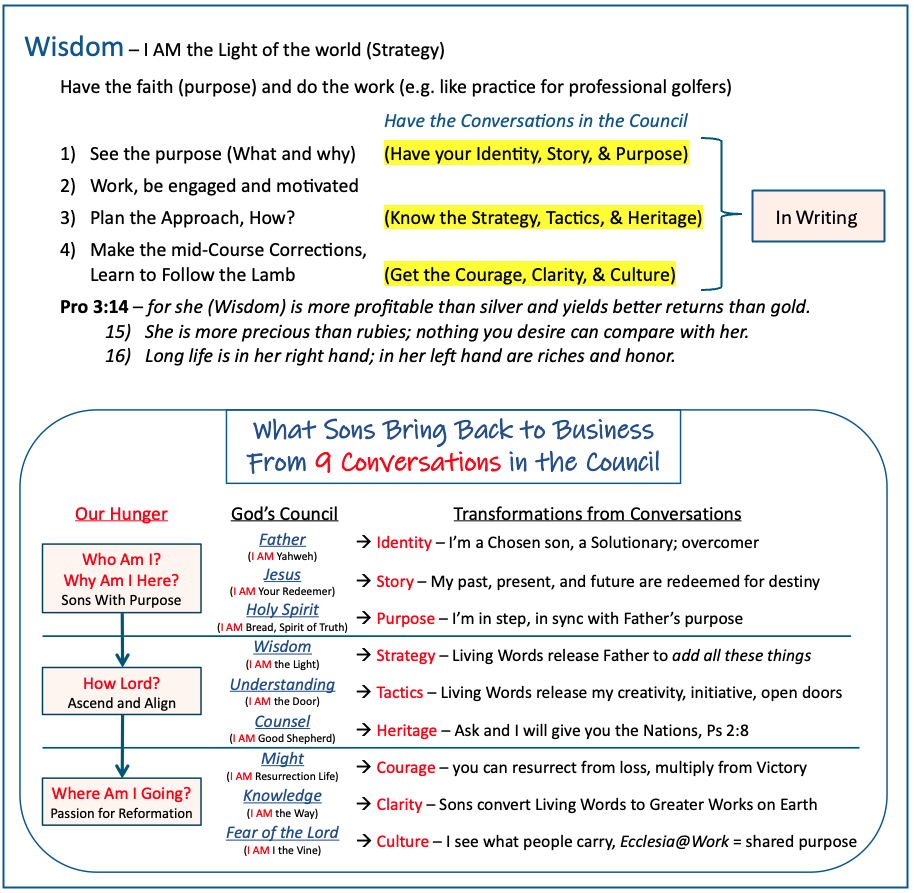
Loving people is not a separate assignment from loving God; it is the overflow of the same river. When sons ascend to the Council and hear Father’s heart for a specific person, that word becomes the primary vehicle of love. Not generic encouragement, but a Living Word that carries Father’s actual tone toward someone who has spent years certain His tone was harsh, critical, exposing, and condemning.
Romans 2:4 — “God’s kindness is intended to lead you to repentance.”
It is Father’s kindness — not guilt, not the accountability of a hard man’s expectations — that leads to repentance. The problem is that most people have never tasted it personally. They have heard about it, believed it doctrinally, but never experienced it personally. They have not heard it spoken into their hearts as a Living Word. They have never felt “chosen by God” for a reason they can name.
Psalm 34:8 — “Taste and see that the LORD is good; blessed is the one who takes refuge in him.”
John 15:16 — You did not choose me, but I chose you and appointed you
so that you might go and bear fruit—fruit that will last—
and so that whatever you ask in my name the Father will give you.
The verb is taste — not study, not agree with. Once someone has tasted that the Lord is good in the specific, Father-to-son, story-redeeming way that a Council encounter produces, the hard-man accusation loses its legal ground. It has been experientially disproven, not just theologically countered.
The Role of Sons: Bringing Justice Through Love
Loving people well requires sons to operate in the Courts of Heaven, not just the Council. The accusation that God is a hard man is not merely a mistaken opinion — it is a legal claim the accuser (and I) have been holding, reinforced by every unredeemed loss and unanswered prayer. That claim has legal ground, and legal ground requires a legal answer.
Mt 16:19 — “Whatever you bind on earth will be bound in heaven,
and whatever you loose on earth will be loosed in heaven.”
Sons carry the keys that set captives free — authority in both directions. They open doors no man can shut (Isa. 22:22) and close doors no man can open. The culture of love is judicial at its core: sons take people to the Courts, identify the specific accusations the enemy holds against their lives, have those accusations legally dismissed through the blood of the Lamb, and release the decrees that replace them. John 20:23’s authority — breathed into sons by the resurrected Son — is not a pastoral function. Sons play a role in Judgement via the Courts of Heaven. Sons are not sentencing people. They are liberating them from sentences the accuser has already imposed.
Giving People Their Decrees From Father
The most practical expression of a culture of love is prophesying decrees into people’s hearts: specific, identity-rooted, story-honoring, purpose-naming encouragement that reaches the place the hard-man accusation has been suppressing. Sons who have heard Father’s heart for a specific person carry something that person cannot produce for themselves — the external confirmation of what Father wrote in their heart’s desires and what Holy Spirit is whispering in their ear, spoken out loud in their presence. Those prophetic experiences feel loving and encouraging for the recipient!
Speak to their identity, story, and purpose — not just their failings.
They already have ears trained to hear condemnation.
Give them what Father actually has in His Heart for them.
Most people have ears trained to hear condemnation. A word of genuine prophetic affirmation is disorienting at first. It requires multiple encounters, multiple Living Words, multiple Council sessions in which Father’s consistent tone becomes undeniable. A culture of love is one where this is ongoing and normal — where the hard-man accusation is progressively starved of oxygen and people increasingly expect Living Experiences and Living Words rather than judgment when they approach Father.
The Proof of Love – What you Do! (Seers and Doers)
In the Council session that inspired this blog, Father made a clarifying observation: love listens and does. Sons are seers and doers. And Jesus was explicit about what this means in practice:
John 14:15, 21 — “If you love me, keep my commands…
Whoever has my commands and keeps them is the one who loves me.”
The word translated “commands” here is not the Mosaic law code. It is the Living Words sons and daughters receive in the Council — Father’s specific, timely, directional words for our specific situation. Jesus was modeling this Himself: “The Son can do nothing by himself; he can only do what he sees his Father doing” (Jn. 5:19). The proof of love is not sentiment. It is not attendance. It is the willingness to ascend, hear the Living Words in the Courts and Council of Heaven, and act on them here on good old terra firma.
Matthew 4:4 — “Man shall not live on bread alone,
but on every word that comes from the mouth of God.”
Living Words are Food, daily bread
A son who loves Father goes to the Council the way a hungry person goes to the table, not because it is on the schedule but because co-laboring with Father is where life comes from; purposeful work is nourishment for our souls (Jn 4:32). And a son who loves people takes what he received at that table and feeds my sheep; speaks it into their identity, releases it as a decree over their situation, and carries it into the Courts on their behalf when they are not yet strong enough to bring their own case.
This is what sons do. This is what a culture of love produces — not a community of disconnected people who keep God at a distance, but a community of sons and daughters:
-
- who know why they are chosen and appointed,
- who are connected with their unique identity, story, and purpose,
- who are engaged in Father’s purpose practically, creatively, vocationally,
- who taste His goodness in Living Words and conversations in the Council routinely,
- who have accusations against them legally dismissed in the Courts of Heaven,
- and who in turn become the ones who speak life into the next person who has spent too long believing God is a hard man. They set captives free.
The culture replicates itself as an Ecclesia around the shared purpose in a business. It’s more natural to disciple sons and daughters 40 hours a week in a vocational setting with a contagious Kingdom Culture. Love that is received becomes love that is shared, and the Kingdom advances one Council session, one decree, one liberated son, and one business at a time. It’s fun squared!
Homework – When the Lord shows you captives carrying accusations in your circle of friends or staff,
take them to the Courts of Heaven and set them free. Watch for fruit that remains.
This blog was inspired by a Council session that might be better than the blog.
2026-05-01 Council – Tasting the Goodness of God
ReleasingKings.com │ JohnGarfieldConsulting.com
Take the Next Step:
Progression to Sonship – Your Kingdom purpose and redemptive stories form the basis for your personal identity, purpose, value creation, and your business offer. Becoming your authentic self is the Father’s non-religious key to flow and fruit in business and life. We offer practical and prophetic coaching to help you get there, flowing with your Father (co-laboring) instead of fighting circumstances and resistance alone. Is this You?
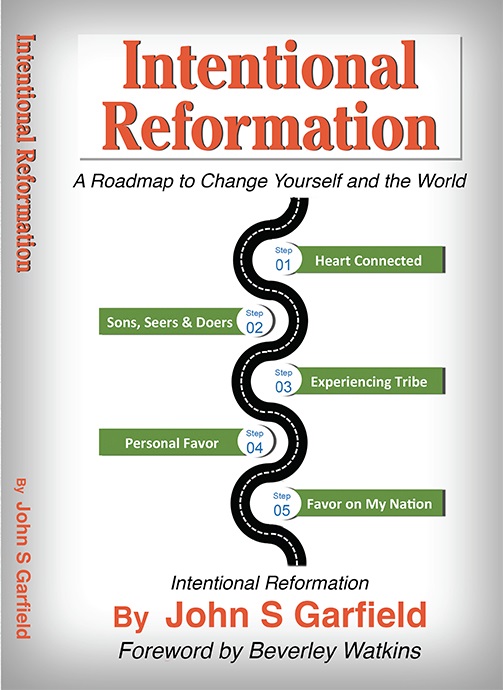
Read the book and chat with John about Kingdom Business Coaching.