20 Reasons for Preterism: The Doors It Opens
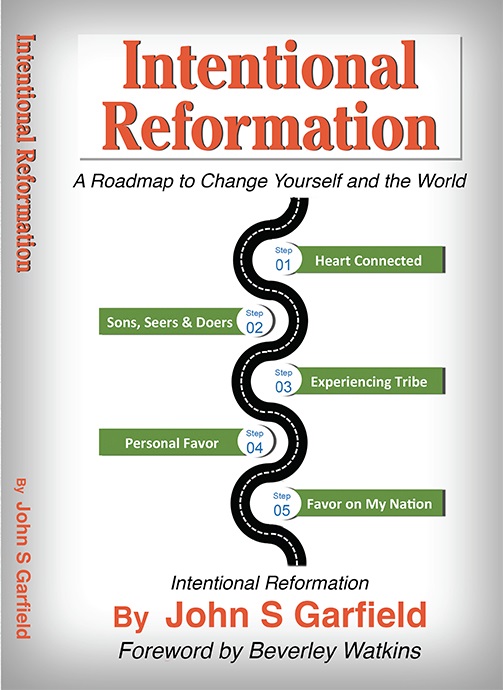
(Intro Video) The academic and biblical case for preterism is strong — but that is not its most compelling argument. The most compelling argument is what preterism unlocks. Every theological system produces a posture. Dispensationalism produced a church that waits, withdraws, and watches for escape. Preterism produces sons and daughters who ascend, co-labor, and reform. Here is the full map of what that door opens. Here’s the Book that show’s you what’s past the door: Sonship, Ascension, and Reformation.
Spiritual Benefits
- It releases sons into Reformation instead of waiting. Dispensationalism told the church that history is in terminal decline, that culture cannot be redeemed, and that the best strategy is survival until extraction. Preterism relocates the great tribulation, the judgment of Jerusalem, and the “wrath to come” into the first century where they belong — and announces that we are living on the far side of that judgment, in the age of the New Covenant fully inaugurated. Sons are not waiting for the Kingdom to arrive. The Kingdom has come. The question is not “when will things get better?” but “what is the Father doing in the earth today, and how do I join him?”
- It opens the door to Ascension instead of Rapture. The rapture is a passive event that happens toyou. Ascension is an active practice you engage in. When the “gathering to him” of 2 Thessalonians 2:1 and the “assembling together” of Hebrews 10:25 are read as first-century events fulfilled in 70 AD rather than future events to anticipate, the believer’s attention shifts from waiting to be gathered up to learning to ascend now — into the Council, into the courts, into the presence of the Father. John 1:51 is not a promissory note for a future dispensation. It is an open door available to every son and daughter today.
- It releases the weapons that are not of this world — 2 Cor 10:3-5. “Though we live in the world, we do not wage war as the world does. The weapons we fight with are not the weapons of the world. On the contrary, they have divine power to demolish strongholds. We demolish arguments and every pretension that sets itself up against the knowledge of God.”Dispensationalism spiritualizes these weapons into personal piety while conceding the actual cultural battlefield to the enemy. Preterism restores them to their proper function — offensive spiritual armaments used by sons to dismantle the ideological and demonic structures that hold people, cities, and nations captive.
-
- Access to the Courts of Heaven:
- Accusations – Sons ascend to the heavenly court to refute the accusations that give the enemy legal standing in a person’s life, a family’s bloodline, a business, or a city. Zechariah 3 is the template: Joshua stands before the Lord, Satan accuses, the Lord rebukes Satan, the filthy garments are removed, and a new identity is conferred. This is not a future hope — it is a present practice for sons who know their seat.
- Overthrowing Strongholds — The stronghold (ochuroma means castle) in 2Cor 10:4 is not primarily demonic possession. It is a fortified argument — a belief system, a cultural narrative, a theological framework, a deception — that has walled people off from the knowledge of God. Dispensationalism itself is a stronghold. The Sacred/Secular Divide is a stronghold. New Thought is a stronghold. Sons with access to council-level strategy can identify, name, and dismantle these structures in the spirit before engaging them in the culture.
- Access to the Father’s Council with the Seven Spirits — Isaiah 11:2 names them: the Spirit of the Lord, Wisdom, Understanding, Counsel, Might, Knowledge, and Fear of the Lord. These are not abstract attributes — they are seven streams of intelligence and empowerment available to sons who are seated in the Council. From there sons receive Living Words: specific, timely, directional words that carry the Father’s authority and move mountains when spoken into the earth. Jesus only said what he heard the Father saying (John 5:19; 12:49). That is the model — council intelligence translated into earthly action.
- Access to the Courts of Heaven:
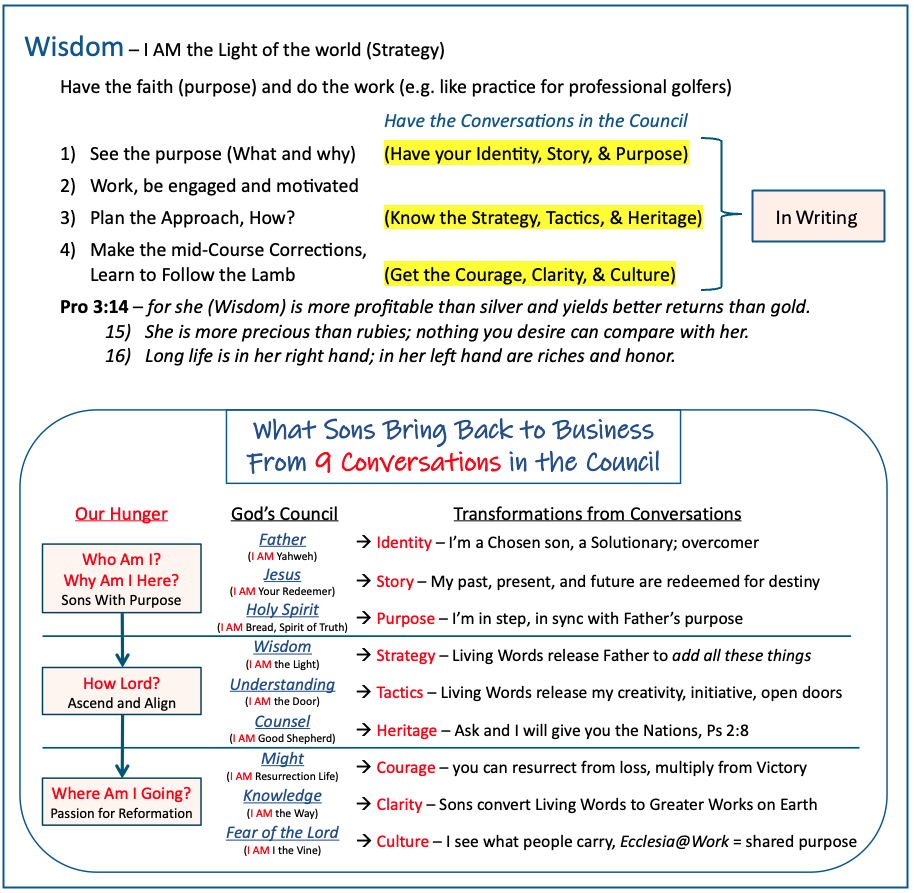
- It restores the priesthood and kingship of sons. The dispensational church has priests without kings — people who can intercede, but who do not believe they have authority to act on what they receive. Preterism restores the full Melchizedek order: sons who are both priests (accessing heaven, bringing things back) and kings (releasing those things into the earth with authority). The sword received in the Council session has Dunamis(power) on one side and Exousia (authority) on the other. That dual anointing is the birthright of every son in the preterist/Sonship framework.
- It resolves the identity crisis of the church. Dispensationalism created a church whose defining identity is “not yet” — not yet transformed, not yet victorious, not yet in the Kingdom. Preterism declares the New Covenant fully ratified, the old age fully passed, and sonship fully available now. Sons know who they are. Identity clarity is not a luxury — it is the foundation from which every act of reformation flows. A son who knows he is seated in the heavenly places (Ephesians 2:6) acts differently than a pilgrim waiting for a bus.
- It makes prayer intelligent rather than general. General prayer — “Lord, bless the nations, have your way” — is the prayer of a church that does not know its council seat. Sons who ascend, hear the Father’s strategy, and receive Living Words can pray with surgical precision: specific decrees, specific courts, specific principalities addressed by name, specific breakthroughs declared over specific people and geographies. Elijah did not generally pray for rain. He received intelligence from the council (1 Kings 18:41 — “there is the sound of abundant rain”) and then acted on it. That is the preterist/Sonship prayer model.
- It makes suffering intelligible and productive. Dispensationalism interprets suffering as confirmation that the world is getting worse and the rapture is getting closer. Preterism, rooted in the Joseph narrative and the resurrection pattern, interprets suffering as the pathway through which sons are equipped, positioned, and ultimately vindicated. “You meant it for evil, but God meant it for good.” Every setback is a council appointment in disguise. This is not optimism — it is a cosmology in which the Father wastes nothing.
- It restores the meaning of the Lord’s Supper and corporate worship. When Hebrews 10:25 is read as “ascending into the heavenly assembly” rather than “attending Sunday services,” corporate worship becomes a council convening. The Lord’s Supper is not a memorial for the dead — it is a covenant meal shared with the living Lord, in his presence, in the council chamber. The early church understood this. The liturgy was not audience participation; it was a throne room event.
Political Benefits
- It gives sons a theology of cultural engagement. A church that believes it is living in the terminal decline of history has no theological justification for long-term cultural investment. Why build institutions, reform legal systems, or develop economic frameworks if it all burns in the tribulation? Preterism removes that escape hatch. Sons are called to disciple nations (Matthew 28:18-20) because the nations are the inheritance of the King who is already on the throne (Psalm 2:8). Cultural engagement is not optional charity — it is the core assignment.
- It equips sons to identify and dismantle the powers behind political systems. Daniel 10 reveals that territorial princes — council-level spiritual powers — stand behind nations and governments. A preterist/Sonship son does not merely vote, lobby, or argue policy. He identifies the archonbehind the ideological stronghold, takes that case to the courts of heaven, receives strategy from the council, and then acts in both spiritual and natural spheres simultaneously. This is kingdom politics — operating on two levels at once.
- It breaks the unholy dispensational alliance with Christian nationalism built on ethnic Israel. As Hummel’s Rise and Fall of Dispensationalismdocuments, Christian Zionism and uncritical support for Israeli foreign policy was a direct product of dispensational theology. When preterism correctly places the fulfillment of Israel’s national promises in Christ and in the first century, it frees sons from geopolitical captivity to a particular nation-state. Sons can then advocate for justice in the Middle East — and everywhere — on the basis of Kingdom principles rather than prophetic timelines, without being accused of theological compromise.
- It produces sons who govern rather than protest. Protest is the posture of people who believe the system is against them and cannot be changed from within. Governance is the posture of sons who know they are co-heirs of a Kingdom that is expanding. Preterism produces governors, not protesters — people who enter systems to reform them from the inside, as Joseph in Egypt, Daniel in Babylon, and Nehemiah in Persia.
- It gives the church a long-term horizon for investment. Dispensationalism produced a church that would not plant trees it would not live to see. Preterism restores the multigenerational vision — sons building heritage for children and grandchildren, investing in institutions that outlast their own lifetimes, thinking in terms of decades and centuries rather than prophetic countdown timers.
Practical Benefits
- It transforms business from survival to reformation. The dispensational business owner is, at best, funding missionaries while waiting for the end. The preterist Kingdom Business owner understands that his company is an embassy of the Kingdom — a place where heaven’s culture is modeled, people are pulled into their identity and calling, and wealth is generated for reformation rather than merely personal comfort. Business becomes a vehicle of discipleship, not just commerce.
- It makes co-laboring with the Father the normal mode of work. “I only do what I see the Father doing” (John 5:19) is not a verse about Jesus’ unique divinity — it is the description of how sons operate. When sons ascend to the Council, receive Living Words about their business, their clients, their staff, and their city, and then act on those words in the natural, work becomes co-laboring. Every meeting, every client interaction, every hiring decision is potentially a council-informed act. The Father is not watching from a distance; he is the senior partner at the table.
- It releases sons from the poverty mentality embedded in dispensational theology. A church expecting to be raptured does not build generational wealth. A church expecting to be in tribulation does not develop robust economic strategies. Preterism opens the door to a theology of abundance rooted in stewardship: sons managing the Father’s resources, multiplying them, and releasing them into reformation. Wealth is not a sign of worldliness in this framework — it is a tool of kingdom advance.
- It validates the prophetic in the marketplace.Dispensationalism siloed prophecy into the church building. Preterism and Sonship theology release the prophetic into every sphere — business, law, medicine, government, education, arts. Sons who ascend to the Council return with specific intelligence about people, systems, and opportunities. That prophetic intelligence is not mystical entertainment; it is the most practical competitive advantage available. A lawyer who hears from the council about a client’s case is operating at a level no purely natural attorney can match.
- It connects inner healing to purpose rather than stopping at relief. Inner healing ministries have historically been strong on getting people out of pain and weak on getting them into destiny. Preterism provides the missing framework: the reason people need to be healed is so that they can be deployed. Sons are not healed so they can be comfortable — they are healed so they can take their seat. Every healing is a council reseating.
- It gives sons a framework for raising the next generation. Dispensationalism had nothing to say to children except “be saved before the rapture.” Preterism gives children an inheritance, a calling, a role in an expanding Kingdom, and a heritage to steward. Sons raise sons. The multigenerational dimension — heritage as a living inheritance passed from one generation of council members to the next — becomes the central parenting framework.
- It resolves the tension between faith and action. Dispensationalism created a passive faith — God is sovereign, history is scripted, all we can do is endure. Preterism creates an active faith — God is sovereign andhe has chosen to co-labor with sons, which means their choices, their decrees, their presence in the council, and their action in the earth actually matter. Faith without works is dead not because God needs our help, but because sons who do not act are branches that do not bear fruit. The vine produces through the branches, not around them.
The Summary Motive for Preterism
Preterism is not primarily an academic doctrine about when things happened. It is a declaration about what is now available. Every benefit of preterism flows from a single shift: the age of waiting is over. The Kingdom has come. Sons are seated. The Council is open. The weapons are live. The nations are our inheritance. The only question is whether the believers will take their seat — or keep staring at the sky.